Flu, RSV, and Pneumonia Season: How Utah Seniors Can Prepare at Home
Every year around Labor Day, Utah families start thinking about school schedules and football. Fewer of us think about what else the calendar is turning over: respiratory illness season. Flu, RSV, and pneumonia circulate hardest from roughly October through March — and for an adult in their seventies or eighties, especially one already managing heart or lung disease or diabetes, a common respiratory bug is not a nuisance. It is one of the most reliable reasons older adults end up in the hospital.
The good part is that the preparation window is open right now, and almost all of it happens at home. Here is what is worth doing in the next few weeks.
Start with vaccines — and ask which ones apply
Early fall is the standard time to get a flu shot, because protection takes about two weeks to build and it is best to have it in place before the season peaks. Depending on age and health history, a physician may also discuss pneumococcal vaccination, an RSV vaccine, or an updated COVID-19 booster.
Which ones apply is genuinely individual — it depends on age, prior vaccines, and existing conditions — so the useful move is not to guess from an article but to call the primary care office and ask, “Which vaccines does my mother need this fall, and when should she get them?” Pharmacies across Weber, Davis, and Salt Lake counties administer most of these, and many will bill Medicare Part B or Part D directly.
Know what a respiratory illness looks like in an older adult
This is the part that catches families off guard. Older adults often do not present with the textbook picture. Instead of a high fever and dramatic cough, the first sign may be confusion, sudden weakness, a fall, poor appetite, or simply “she is not acting like herself.” A senior can have pneumonia with a normal temperature.
So the signal to watch for is not a single symptom — it is a change from that person’s baseline. New shortness of breath, faster breathing, new confusion, refusing food or fluids, or a sudden inability to do something they did easily last week all warrant a same-day call to the physician. Bluish lips, chest pain, severe breathing difficulty, or unresponsiveness mean calling 911.
Build the household habits now
Ordinary precautions do a lot of work here. Handwashing before meals and after outings. Asking visiting family — especially grandchildren who just went back to school — to stay home when they are sick rather than “powering through” a visit. Keeping frequently touched surfaces wiped down. Running a humidifier if dry indoor heat makes breathing uncomfortable, and cleaning it regularly so it does not become its own problem.
Hydration matters more than people expect. Older adults often feel less thirst, and a dehydrated person handles an infection worse. Keeping water within arm’s reach and offering it on a schedule beats waiting to be asked.
Get the practical logistics out of the way
A few things are much easier to do in September than in the middle of a January illness:
- Refill and organize medications, and confirm there are no gaps in prescriptions heading into winter.
- Make sure a working thermometer and a pulse oximeter are in the house, and that someone knows the person’s normal readings.
- Write down the physician’s after-hours number and post it where any family member or aide can find it.
- Check that inhalers, nebulizer supplies, or home oxygen equipment are in good working order.
- Stock a small shelf of easy fluids and simple foods for the days when cooking is out of the question.
- Plan for winter weather — who clears the walk, who picks up prescriptions if the roads are bad.
Where home health fits
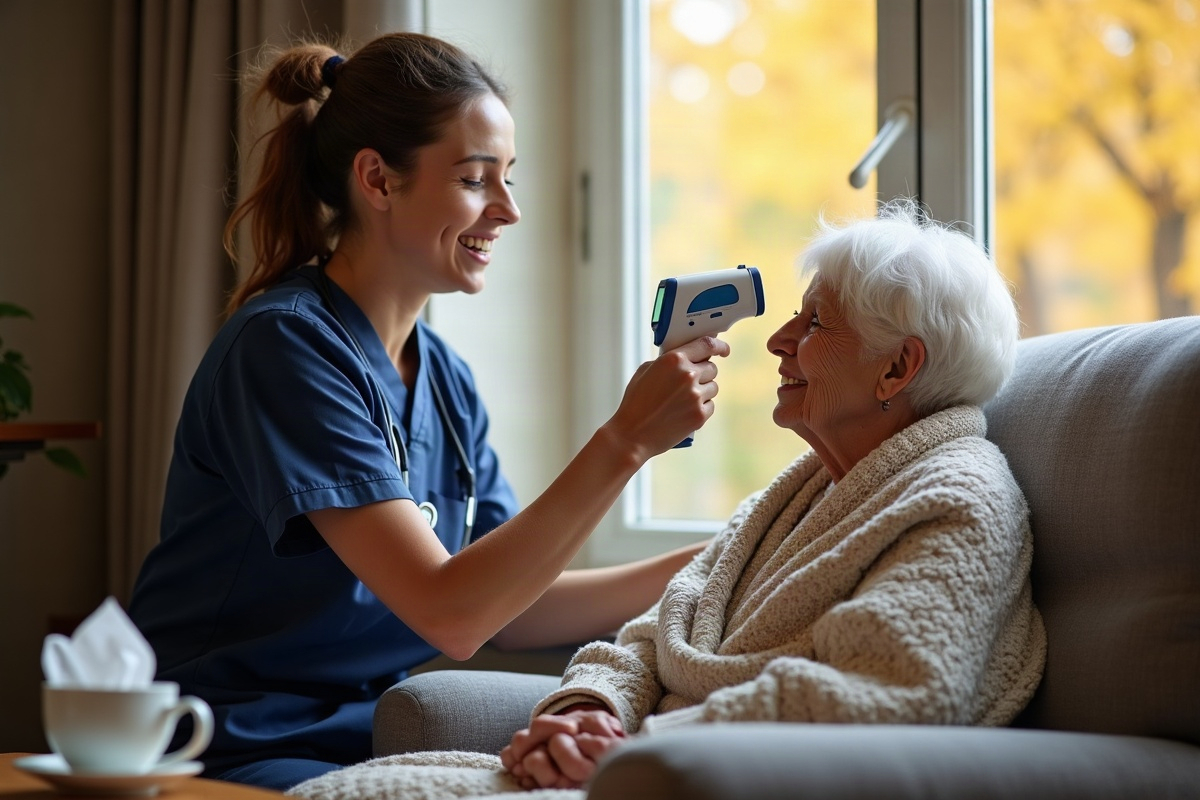
For someone who has been in and out of the hospital, or who is managing COPD, heart failure, or diabetes, a Medicare-certified home health agency adds a layer of monitoring that a family cannot easily provide on its own. A skilled nurse visiting in the home takes vital signs, listens to lung sounds, reviews medications, and — most importantly — knows what that specific patient looks like on a good day. That baseline is what makes it possible to catch a change on day one instead of day four, and to reach the physician while the problem is still manageable at home.
Home health also covers the teaching side: how to use an inhaler correctly, what a daily weight log is telling you, which symptoms justify a phone call versus a hospital trip. Under Medicare Part A or B, home health is generally covered for patients who are homebound and have a physician’s order for skilled care, though eligibility depends on individual circumstances. Our office can help verify coverage and coordinate orders before care begins.
The season is predictable — use that
Unlike most health risks, this one arrives on a schedule. That is an advantage. A conversation with the doctor about vaccines, a stocked medicine cabinet, an agreed-upon list of warning signs, and a family that knows who to call turns a frightening season into a managed one.
If you are caring for an older adult in Northern Utah and want help putting that plan in place before the weather turns, we would be glad to talk it through with you.
Get ahead of respiratory season in Northern Utah
Specialty Nursing Services is a Medicare-certified home health agency providing skilled nursing, therapy, and chronic condition management throughout Northern Utah. If you are worried about how a loved one will weather flu and RSV season at home, our care team can walk you through the options and coordinate with their physician.