Getting a Utah Senior’s Home Ready for Winter: Ice, Cold and Storm Season
The first real snow in Northern Utah always seems to arrive before anyone feels ready for it. One week the walkway is dry, and the next there is a glaze of ice on the front steps at seven in the morning that looks exactly like wet concrete.
For an older adult living at home, winter changes more than the weather. It changes how safe it is to get to the mailbox, how easy it is to get to a doctor’s appointment, how often anyone comes by, and how quickly a small problem turns into a hospital stay. Late September and October are the right time to get ahead of it — the work is much easier to do before the ground freezes.
Ice is the hazard, not snow
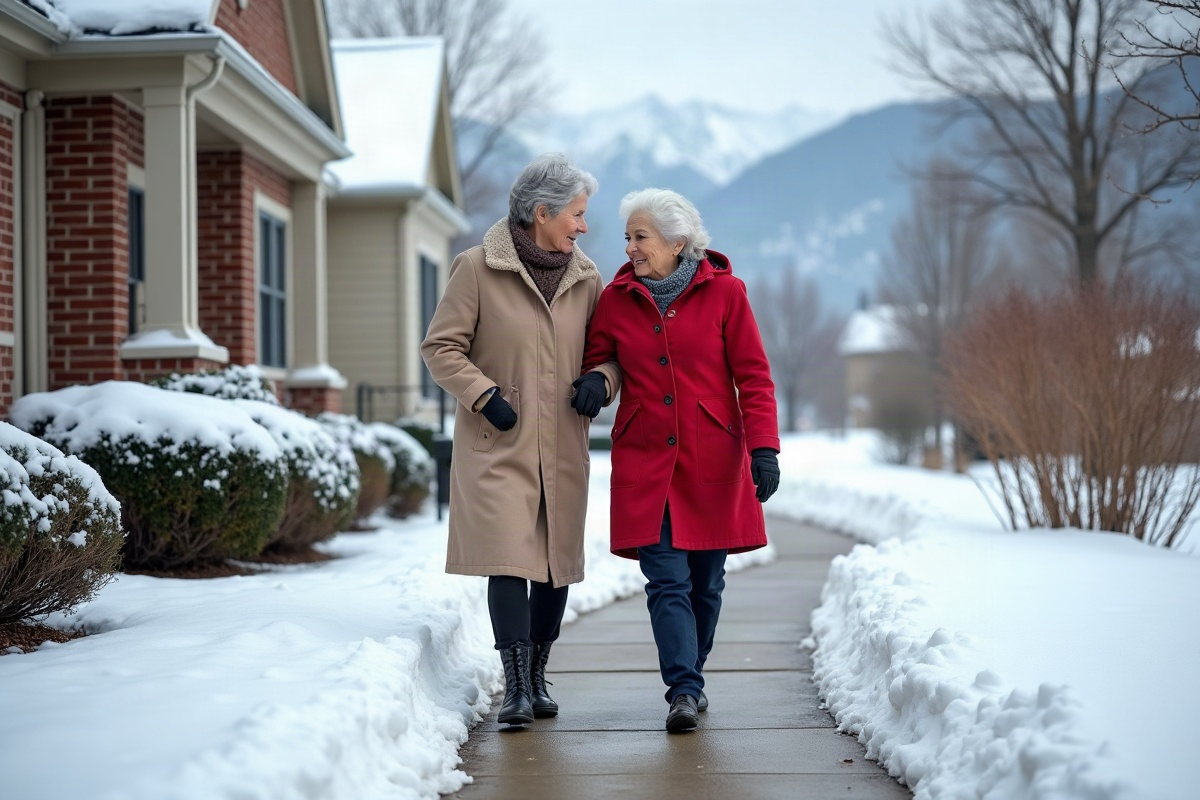
Fresh snow is visible. Ice usually is not, and the most dangerous version is the thin refreeze that forms overnight when the previous day’s melt runs across a walkway and hardens before sunrise. It shows up first on north-facing steps and in the shade beside the garage — exactly the places people walk without thinking.
A few things that make a real difference:
- Arrange snow removal before you need it. A neighbor, a grandchild, a church group, or a paid service — but settled in advance, with a standing expectation that the walk and steps get cleared, not just the driveway. Nobody should be shoveling their own walk after a cardiac event, a joint replacement, or with heart or lung disease.
- Keep ice melt where it can actually be reached. A small scoop in a covered container by the door beats a fifty-pound bag in the garage that requires a trip across the ice to fetch.
- Check the handrails now. Grip both outdoor rails and pull. A rail that wobbles in October is a rail that fails in January. Both sides of the steps, if possible.
- Get winter footwear out early. Rubber-soled boots with real tread, fitted well, kept by the door. Slip-on ice cleats help on packed snow but are dangerously slick on indoor tile — they come off at the threshold, every time.
- Light the path. Winter afternoons get dark early. A motion light over the steps and driveway is a small purchase that prevents a specific kind of fall.
- Move the entry mat. Wet boots, a loose rug, and a smooth floor are a bad combination. A rubber-backed mat that lies flat, plus a bench to sit on while taking boots off, removes most of that risk.
Everything in our indoor fall prevention checklist still applies in winter — the outdoor hazards simply stack on top of it.
Cold and dry air ask more of the body
Older adults lose heat faster and often feel cold less accurately, which means someone can be genuinely too cold in their own living room without complaining about it. Certain medications and chronic conditions make that worse. A house kept warm enough — and layers, warm socks and a blanket within reach of the chair where they actually sit — matters more than it does at fifty.
Cold, dry air is also hard on breathing. For anyone managing COPD or heart failure, a cold snap or a valley inversion can tighten symptoms noticeably. Loosely covering the nose and mouth with a scarf on the way to the car, keeping rescue inhalers where they are easy to find, and staying indoors on the worst air-quality days are all reasonable adjustments.
Hydration slips in winter because thirst fades when it is cold, and our climate is dry year-round. Warm fluids count. So does soup. Dry indoor heat also cracks skin, which matters a great deal for anyone with fragile skin or a wound that is healing slowly; a good lotion and a humidifier are cheap insurance.
Be ready for the days nobody can get there
A storm that closes the canyon roads or coats the valley in ice can isolate someone for two or three days. The question worth asking in October is simple: if no one could reach the house for seventy-two hours, would everything still be fine?
That usually means a two-week cushion on prescriptions rather than picking them up the day they run out, shelf-stable food that can be prepared without much effort, flashlights and fresh batteries, a phone charged and a charged backup battery, warm blankets, and a working plan for heat if the power fails. Never a gas stove or an outdoor grill for warmth — carbon monoxide is a real and recurring winter danger. Test carbon monoxide and smoke alarms at the same time you check the furnace, and have the furnace serviced before the first cold night.
Also worth doing while the weather is still mild: this season’s flu, RSV and pneumonia vaccinations, and a written list of medications and physicians posted on the refrigerator where paramedics would find it.
The quiet risk: isolation
Winter shrinks a person’s world. Errands stop, visits thin out, daylight is short, and someone who was doing fine in September can become noticeably less steady, less engaged and less well-fed by January without any single thing going wrong. Set up a daily check-in call or text now, while it is easy to remember, and treat a change in mood, appetite or alertness as information rather than as “just winter.”
How home health fits
Winter is the season when regular eyes on the situation earn their keep. A Medicare-certified home health nurse visiting the home sees the loose handrail, the thermostat set too low, the shoveling nobody has arranged, and the medication supply about to run out before a storm. Vital signs, weights, wound checks and medication reviews happen on schedule regardless of the roads, and changes get reported to the physician early — which is usually what keeps a winter problem from becoming a winter admission. Where a therapist is warranted, physical and occupational therapy can work directly on balance, safe transfers and getting in and out of the house in bad conditions.
If you are looking at an aging parent’s front steps this fall and feeling uneasy about the months ahead, that instinct is worth acting on now rather than after the first fall.
Worried about a parent making it through the winter at home?
Specialty Nursing Services is a Medicare-certified home health agency serving families across Northern Utah. Our nurses and therapists check the home for winter hazards, keep medications and vital signs on track through storm season, and coordinate with your physician so small problems get caught early. Call and we will walk you through what home health can do, at no obligation.