Using Oxygen at Home: A Safety Guide for Utah Families
When a doctor sends someone home on oxygen, families usually hear the instructions once, in a hospital room, on a day when nobody is absorbing much. Then the equipment arrives — a concentrator that hums in the corner, a cylinder for leaving the house, fifty feet of tubing — and the questions start.
Home oxygen is one of the most effective treatments we see. It helps people with COPD, pulmonary fibrosis, heart failure and other chronic lung conditions stay out of the emergency room and keep doing the things that matter to them. It is also a piece of medical equipment living in a house that was not designed around it, and that is where most of the problems come from.
Oxygen is a prescription, not a comfort measure
The flow rate on the dial was chosen for a reason. Turning it up because a loved one seems short of breath, or down because the cannula is irritating, changes the treatment without the physician knowing. For some people — particularly those with advanced COPD — more oxygen is not automatically better, and the decision belongs with the prescribing doctor.
The same goes for skipping it. Oxygen prescribed for continuous use means continuous, including overnight, when levels often drop the most. If wearing it at night is uncomfortable or the mask leaks, that is worth a phone call, not a quiet decision to go without.
The fire risk is real, and it is manageable
Oxygen itself does not burn, but it makes everything around it burn faster and hotter. That single fact drives almost every safety rule you will be handed:
- No smoking in the home, by anyone, and no lit candles or incense. Post a sign by the door so visitors know before they walk in.
- Keep the concentrator and cylinders at least five to ten feet from open flame — gas stoves, fireplaces, wood stoves, space heaters, pilot lights.
- Skip petroleum-based products on the face and hands while wearing oxygen. Use water-based lip balm and moisturizer instead of petroleum jelly.
- Avoid aerosols and flammable liquids near the equipment: hairspray, spray cleaners, paint thinner, hand sanitizer that is still wet.
- Check your smoke detectors and have a working fire extinguisher where you can reach it.
Tubing is the quiet fall hazard
Long tubing is what makes home oxygen livable — it lets someone move from the recliner to the kitchen without unhooking. It is also a tripwire running across the floor of a home that may already have fall risks worth addressing.
Run the tubing along walls rather than across walkways. Keep it out from under rugs, where it both trips people and kinks without anyone noticing. Watch doorways and recliner footrests, which pinch tubing and cut off flow silently. And make a habit of checking the whole length of the line every day for kinks, cracks and crimps — a tube that looks fine at the concentrator can be flattened ten feet away.
Equipment care that actually matters
Concentrators need air. Keep at least a foot of clearance around the unit, never tuck it into a closet or behind a couch, and rinse the filter on the schedule your equipment company gave you. Cannulas and tubing get replaced regularly — your supplier will tell you how often, and it is usually more often than people think.
Cylinders should be stored upright and secured so they cannot fall, never loose in a car trunk or a hot vehicle. And because a concentrator runs on electricity, every household using one needs a plan for a power outage: a charged portable unit or backup cylinder, the supplier’s after-hours number on the refrigerator, and a call to your utility company to ask about their medical-needs registry.
A few things specific to living in Utah
Altitude is part of the picture here. The air along the Wasatch Front already holds less oxygen than it does at sea level, and a drive into the mountains or a flight out of Salt Lake can change what someone needs. Airlines have their own rules about portable concentrators, and they require paperwork in advance — ask well before the trip, not at the gate.
Winter inversions and summer wildfire smoke both make hard days harder for people with lung disease. On poor air-quality days, keep windows closed, run a filter if you have one, and move activity indoors. Our dry climate also means oxygen tends to irritate the nose; a humidifier bottle on the concentrator, if your supplier provides one, and water-based gel usually solve it.
When to call, and when to call 911
Call the physician or your home health nurse for increased shortness of breath at rest, new or worsening confusion, a cough that changes, swelling in the legs, or a headache in the morning that was not there before. Any of those can mean the current prescription is no longer matching what the body needs.
Call 911 for severe breathing difficulty, chest pain, blue or gray lips or fingertips, or someone who cannot be roused.
How home health fits in
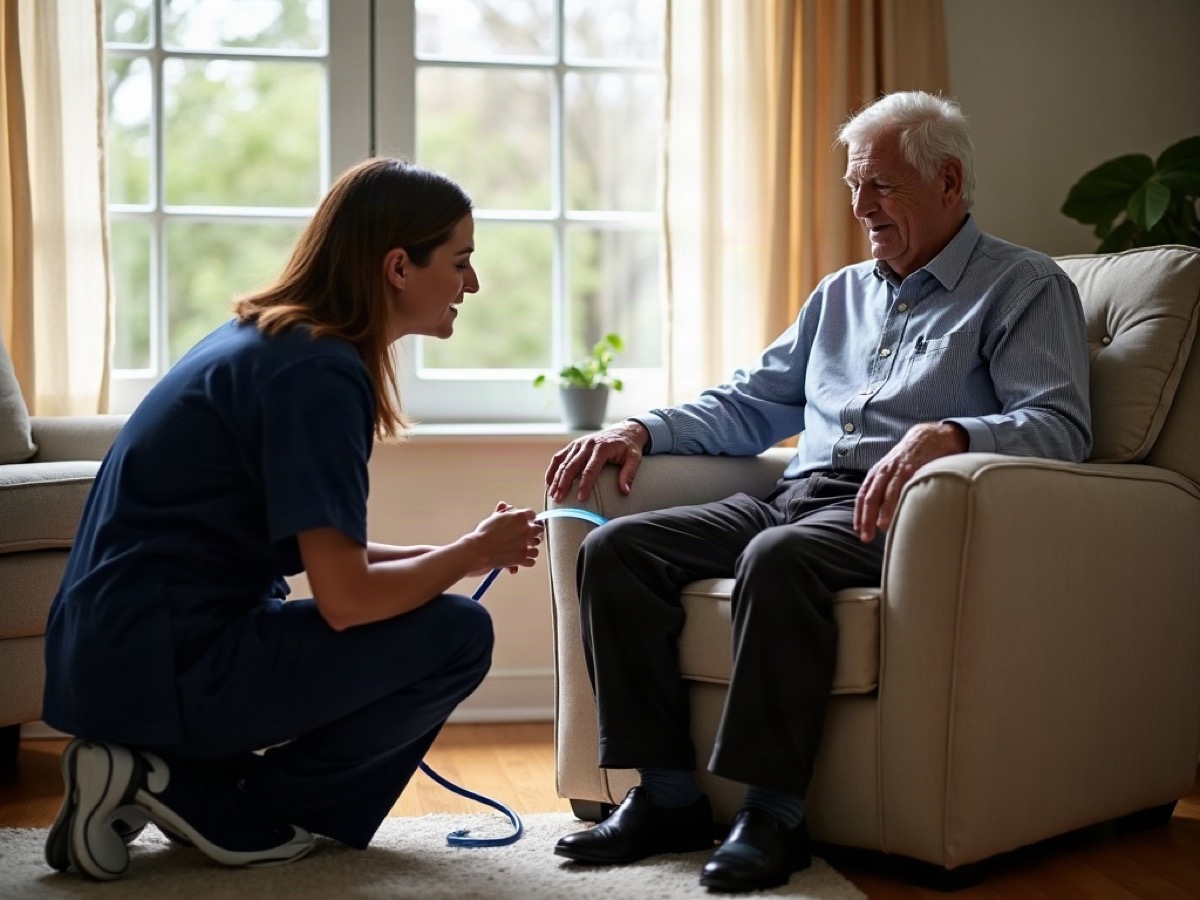
A Medicare-certified home health nurse does the part families should not have to carry alone. We check oxygen saturation and vital signs, confirm the equipment is set where it was prescribed, walk the tubing route for hazards, teach breathing techniques that reduce the panic that comes with air hunger, review medications, and report changes back to the physician early — often before a bad week turns into an admission. For people managing COPD or heart failure at home, that steady monitoring is frequently the difference between a stable fall and a hospital stay.
Oxygen at home should feel like freedom, not like a hazard you are tiptoeing around. With the right setup and someone checking in, it usually does.
Questions about managing oxygen at home?
Specialty Nursing Services is a Medicare-certified home health agency serving families across Northern Utah. Our nurses monitor oxygen levels and breathing, coordinate with your physician and equipment company, make your home safer, and teach families what to watch for. Call us and we will walk you through what home health can do, at no obligation.